
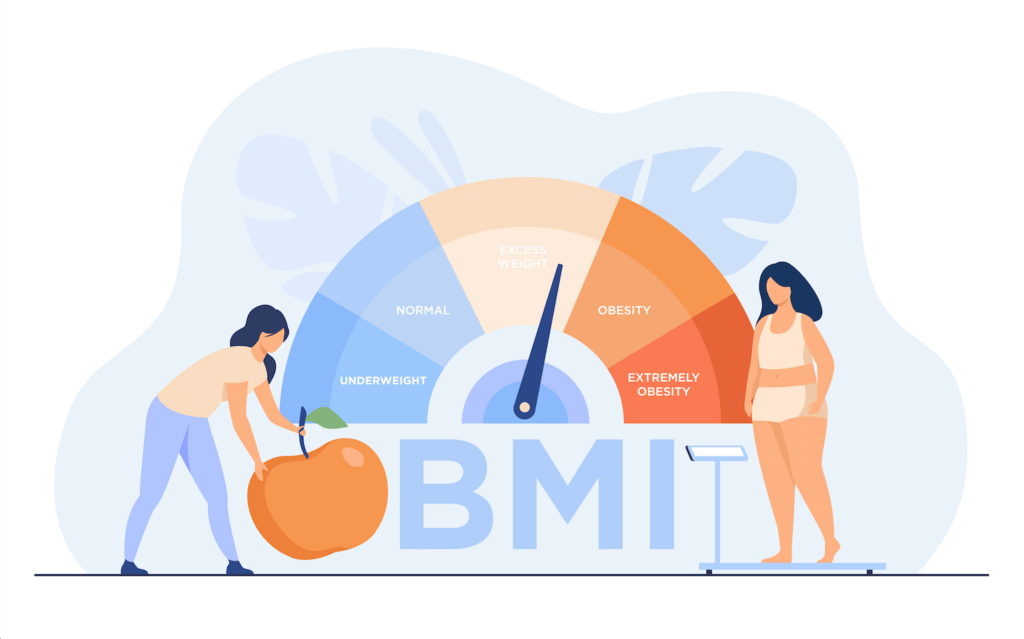
Have you heard the term BMI used when it comes to your ideal weight? So what exactly is it?
The basics of BMI
Body mass index (BMI) is an individual’s weight in kilograms divided by the square of height of that person in meters. BMI is an easy and inexpensive screening method for your weight category. With a BMI reading you can quickly gauge is you’re overweight, underweight, a healthy weight or obese.
The link between your BMI and body fat is strong, but even if two people have the same BMI, their level of body fatness could be different. Other methods to measure body fat include scales, skinfold thickness measurements with calipers, tape measure, hydrodensitometry (underwater weighing), MRI or CT scans and air displacement plethysmography. Speak to us to find out more.
How to calculate your BMI
Formula (for adults* 20 years and older): weight (kg) / [height (m)]2
The formula for BMI is weight in kilograms divided by height in metres squared. Height is mostly measured in centimeters, so divide height in centimeters by 100 to obtain height in metres.
Example: Weight = 68 kg, Height = 165 cm (1.65 m)
Calculation: 68 ÷ (1.65)2 = 24.98
How to interpret your BMI
Below 18.5: Underweight
25.0 – 29.9: Overweight
18.5 – 24.9: Healthy weight
30.0 and above: Overweight
*BMI in children and teens depends on their age and sex. Click here for more information about this.
Obesity in adults
As an obese person, you are more at risk for the following health conditions:
High LDL cholesterol, low HDL cholesterol, or high levels of triglycerides (dyslipidemia)
High blood pressure (hypertension)
Type 2 diabetes
Gallbladder disease
Coronary heart disease
Strokes
Osteoarthritis (a breakdown of cartilage and bone within a joint)
Sleep apnea and breathing problems
Chronic inflammation
Certain cancers (endometrial, breast, colon, kidney, gallbladder, and liver)
Mental illness such as anxiety and clinical depression
Body aches and difficulty with normal physical activities


BMI is not 100% accurate
Calculating your BMI is a quick tool to see if your weight is a healthy or unhealthy one. Yet, it should not be used in isolation. What if the scale says you weigh too much for your height, but a lot of it is muscle (muscle weighs more than fat). Or what if you are breastfeeding and retaining water. There is also the fact that women generally have a higher percentage of body fat, according to research.
These are just a few examples of why BMI should be used in conjunction with other methods like waist circumference, waist-to-height ratio, waist-to-hip ratio and body fat percentage screening.
Act today
Being obese is not a death sentence. Every day is a new opportunity to turn this health condition around, no matter your age or circumstances.
For any queries regarding your BMI and how to lose or pick up weight in a healthy, tasty and sustainable way, please contact us at Tracy Urgarchund & Associates.